 AuthorPostedby
Gas Optimization and Token Approval Management with the Rabby Wallet Extension
You are about to swap a token, provide liquidity, or claim a reward when the wallet preview shows two different costs: the transaction fee itself and a token approval that may be required first. At the same time, network congestion can change the fee between the moment you prepare the transaction and the moment it is confirmed. For a US-based DeFi user, this is not merely a question of finding the lowest gas number. It is a decision about timing, permissions, execution risk, and how much control to retain over smart-contract access.
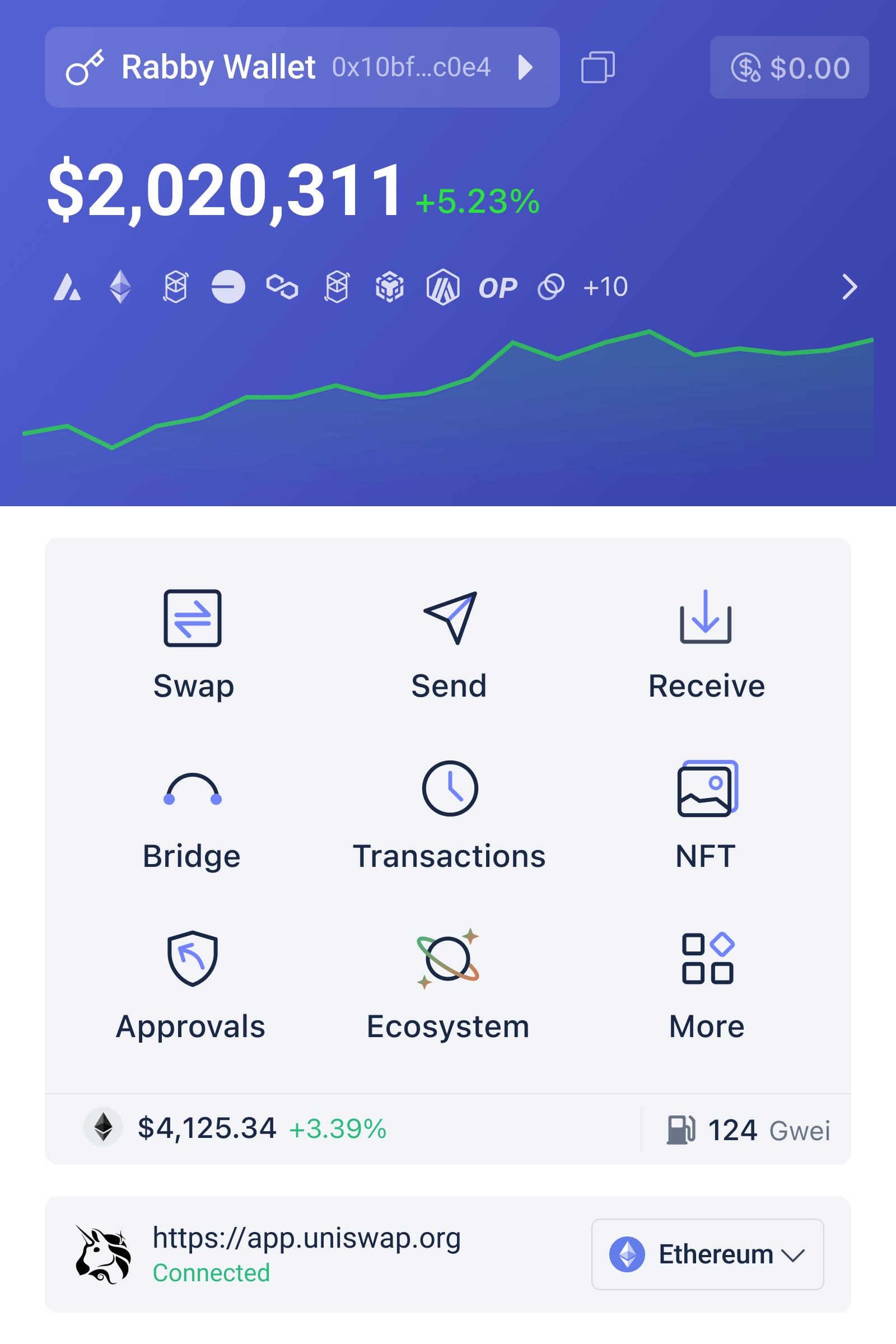
The Rabby browser extension is useful in this setting because a wallet is more than a place to store private keys. It is an interpretation layer between a decentralized application and the blockchain. It helps present transaction details, estimate network costs, and surface contract interactions before the user signs. Those features can make gas optimization and approval management more understandable, but they do not eliminate the need to verify the destination, contract, chain, and economic purpose of a transaction.
Gas optimization is a timing and execution problem
“Gas” is the computational resource consumed by an Ethereum-compatible transaction. The final fee is generally determined by the amount of computation required and the price paid for each unit of that computation. A simple transfer normally requires less computation than a multi-step decentralized exchange transaction, while a transaction that interacts with several contracts can be more expensive even if the transferred asset has a modest dollar value.
This creates an important distinction between reducing gas usage and reducing the dollar cost of gas. The first concerns transaction design: fewer contract calls, less storage modification, or a simpler execution path may reduce the required computation. The second depends heavily on network conditions and the asset’s market price. A wallet can help estimate the likely fee, but it cannot control block demand, validator inclusion decisions, or sudden market volatility.
For example, a user deciding between two swaps may compare the quoted exchange rate and the expected fee. The cheaper-looking route is not automatically better if it requires several contract interactions, has a wider price-impact exposure, or creates an additional approval transaction. Gas optimization therefore means evaluating the full execution path rather than selecting the smallest displayed fee in isolation.
There are two broad approaches. The first is transaction-by-transaction optimization: wait for a less congested period, choose a suitable fee setting, and avoid unnecessary actions. This approach gives the user direct control and may be appropriate for a large transaction where the fee is material. Its weakness is that waiting introduces market risk. The token price, liquidity, or opportunity may change while the user is trying to save on network fees.
The second approach is workflow optimization: combine related actions when the application supports it, avoid repeated approvals, and plan a sequence of DeFi interactions before signing. This can reduce the number of transactions, but it may make each transaction more complex and harder to inspect. A bundled operation is not automatically safer or cheaper. Its usefulness depends on the application’s contract design, the available execution method, and whether failure in one step affects the entire sequence.
Why token approvals are a separate risk category
A token approval is a permission recorded in a token contract. It allows a specified spender—often a decentralized exchange, lending protocol, bridge, or other contract—to move a specified amount of that token from the user’s address. The approval is not the token transfer itself. It is an authorization that may be used later, subject to the allowance and the spender’s contract logic.
This distinction corrects a common misconception: revoking an approval does not reverse a transaction that has already occurred. If a malicious or compromised spender has already transferred funds, changing the allowance afterward cannot restore them. Revocation is preventive and forward-looking. It limits future use of a permission; it is not a recovery mechanism.
Users typically encounter a choice between a limited allowance and an effectively unlimited allowance. A limited approval can reduce the amount exposed if the spender is later misused, and it makes the permission easier to reason about. The trade-off is operational friction: the user may need to approve again when the allowance is exhausted, which creates another transaction and another fee.
An unlimited allowance can make repeated interaction more convenient. For active traders or liquidity providers, it may avoid recurring approval transactions and reduce interruptions during time-sensitive activity. However, convenience extends the potential blast radius of a problem involving the spender contract, the application’s upgrade path, or a compromised interface. The correct choice depends on the user’s activity, the value held in the wallet, and the degree of trust placed in the protocol—not simply on whether the application is familiar.
Approval management is also chain-specific. An approval on one network does not normally authorize the same spender on another network, even if the token has the same symbol and the application uses a similar interface. This matters when using a wallet across Ethereum, layer-2 networks, and other Ethereum-compatible chains. A user who reviews permissions on one network should not assume that the review covers every address and chain in the portfolio.
How Rabby can improve the decision process
When installing the extension, users should obtain it through a source they can verify and should check that the browser extension, domain, and download flow are authentic. Readers who need a starting point can review the rabby extension download information, then compare the installation details with the project’s recognized channels. A wallet extension is a security boundary: a counterfeit version can expose recovery information or manipulate transaction prompts regardless of how careful the user is with gas settings.
After installation, the most valuable habit is to treat the transaction preview as an explanation to investigate, not as a green light. Review the network, recipient or contract, token being spent, amount, estimated gas, and any approval request. If the action involves a permit, signature, or other off-chain authorization, read it with the same caution as an on-chain transaction. Some approvals can be used later without another visible transaction prompt, so the absence of an immediate gas fee does not mean the permission is harmless.
Wallet simulation and risk warnings can improve visibility by showing expected balance changes or flagging unusual interactions. Their limitation is fundamental: they are models of a transaction under particular assumptions. A simulation may not capture every future state change, oracle movement, front-running condition, upgrade decision, or failure occurring after the transaction is submitted. A reassuring preview is evidence about a proposed execution, not a guarantee about the protocol’s future behavior.
This is where the comparison between a convenience-first workflow and a control-first workflow becomes useful. In a convenience-first workflow, the user may approve a larger allowance, leave the wallet connected to frequently used applications, and prioritize fewer prompts. It is efficient for routine activity, but it concentrates permissions and requires stronger confidence in the application and its contracts.
In a control-first workflow, the user grants only the amount needed, separates long-term holdings from an active DeFi wallet, reviews approvals periodically, and revokes permissions that no longer serve a purpose. This adds time and may create more gas transactions. It can also produce a false sense of security if the user focuses only on approvals and ignores phishing, seed-phrase theft, malicious signatures, or a compromised device. Approval hygiene is one layer of wallet security, not the entire security model.
A practical framework for lower-cost, lower-risk DeFi activity
Before signing, ask four questions. First, what is the economic purpose of the transaction, and is the expected benefit large enough to justify the fee? Second, how many contract interactions are involved, and could an unnecessary approval or intermediary step be avoided? Third, what permission is being granted, to which spender, on which chain, and for what amount? Fourth, what is the exit plan if the position is closed or the application is no longer used?
For routine transactions, compare the fee with the transaction’s value rather than chasing a theoretical minimum. For larger positions, consider whether a lower fee setting could increase the risk of delay or failure. A failed transaction can still consume gas, so the cheapest initial setting is not necessarily the lowest total cost. The appropriate choice depends on the network, the transaction’s urgency, and the consequences of non-inclusion.
Users should also distinguish approval revocation from allowance reduction. A full revocation sets the permission to zero, while a reduction may leave a smaller amount authorized. Revocation is clearer when an application is no longer needed; a smaller allowance may be practical for a known recurring workflow. In either case, the user should confirm the correct spender address rather than relying solely on a recognizable application name or token symbol.
A useful portfolio structure is to keep significant long-term holdings in a wallet that is rarely connected to experimental applications, while using a separate wallet for active DeFi interactions. This does not make the active wallet safe by default, and it introduces management overhead. Its value comes from compartmentalization: if an approval or interaction becomes problematic, fewer assets are exposed in the connected wallet.
What to watch as wallet and DeFi design evolves
Gas optimization will increasingly depend on execution architecture, including batching, account-abstraction-style transaction flows, layer-2 settlement, and application-specific routing. These mechanisms may reduce the number of visible user actions or alter who pays the fee. They may also make the underlying transaction harder for a non-specialist to inspect. The likely implication is not that users will need fewer checks, but that clear simulation and permission explanations will become more important.
For now, the strongest decision rule is conditional: use the simplest transaction path that achieves the intended outcome, grant no broader permission than the situation warrants, and treat the fee estimate as uncertain until confirmation. If a wallet preview, approval request, or contract identity is unclear, the rational response is to pause and investigate—not to assume that convenience is evidence of safety.
Frequently asked questions
Does setting a lower gas fee always save money?
No. A lower fee may reduce the chance of prompt inclusion, which can matter if the market moves or the transaction becomes stale. If a transaction fails or must be replaced, the total cost can exceed the amount saved. Gas settings should reflect urgency, network conditions, and the consequence of delay.
Should I revoke every token approval after using a DeFi application?
Not necessarily. Revoking can reduce future exposure, but it costs another transaction and may be unnecessary for a trusted, regularly used workflow. A sensible approach is to review the spender, allowance size, wallet balance, and intended future use. Revoke or reduce permissions that are no longer justified, while remembering that revocation cannot undo transfers already made.
Can Rabby guarantee that a DeFi transaction is safe?
No wallet can guarantee that outcome. Transaction previews, simulations, and warnings can improve the information available before signing, but they depend on assumptions and may not predict every contract state or future event. Users still need to verify the application, chain, contract interaction, and authorization being granted.